
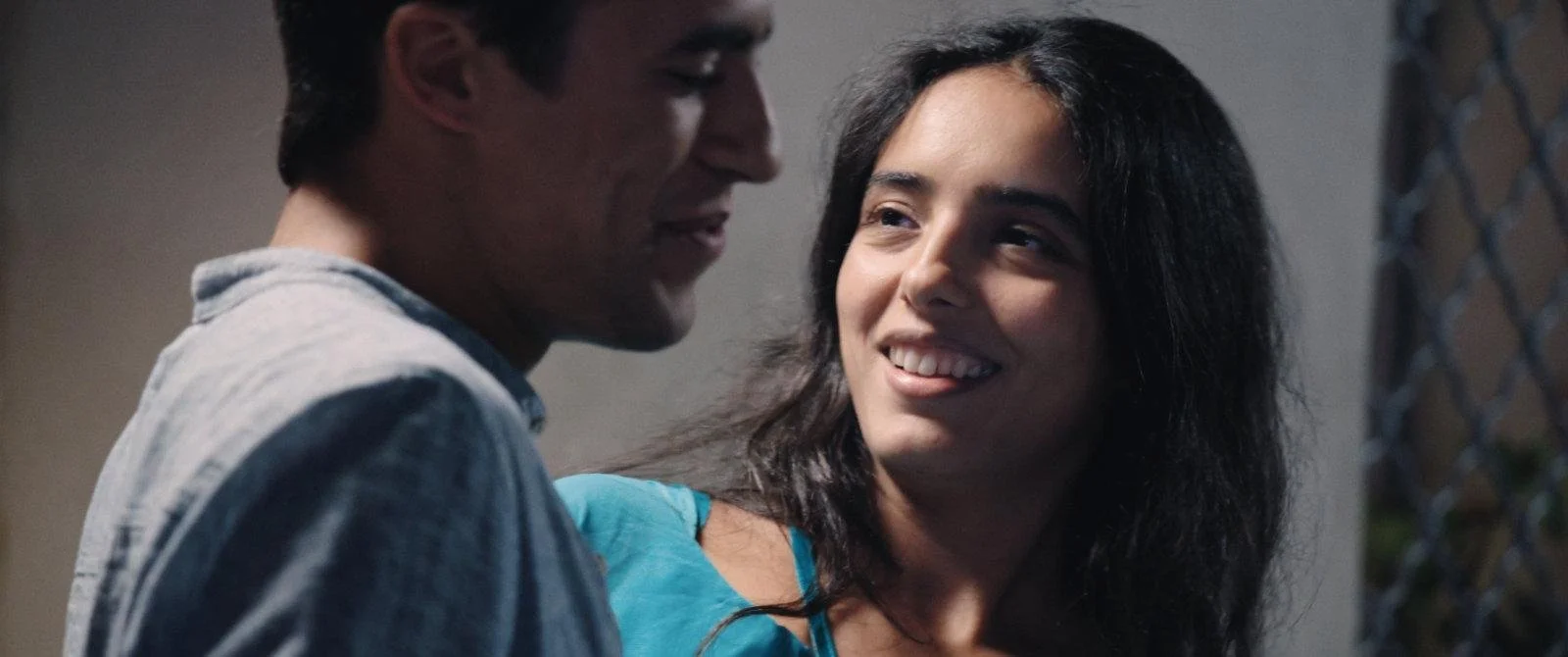
With the release of Mektoub, My Love: Canto Deux, I wanted to revisit the first canto as a case study in spectatorship. The film uses the formal language of realism with its durational structure and naturalistic dialogue while also using plot, setting, and characters that funnel the viewer’s capacity for identification down an extreme minority. This tension produces a rift between representation and reception that makes critiquing the film quite tricky to my mind.
One of the defenses for the existence of art is that it enables spectators to experience lives beyond their own, expanding their empathy in the lived world. Another defense in a parallel line is its ability to achieve recognition: the encounter with images or situations that resonate as familiar, whether universally or within a more narrowly defined social or cultural context. This recognition can create powerful moments of emotional connection and memory based on the individual viewer, even when representation is particular rather than universal. Either known or unknown to the viewer the films in this mode are working in realism. For the human representation film to succeed it must have success in depicting the reality. The characters do not necessarily have to be a one-to-one copy of a viewer for it to enter the realm of recognition and belief, but they need to be able to see a part of themselves, either in mannerism or situations to be able to feel like they could be that person. The reverse of this would be films that are focused on the spectacle; sci-fi, action and general films without a commitment to mimetic reality.
Mektoub, My Love situates itself uneasily between these two sides of the experiential coin. On one hand, its formal elements align with a cinéma vérité tradition: the absence of a conventional narrative arc, the emphasis on quotidian and floating dialogue gesture toward a film that is trying to present itself as film realism. On the other hand, the film’s social and experiential specificity limits the spectator’s ability to enter into mimesis with its characters. The result is not a failure of realism per se, but a narrowing of its accessibility.
It is not difficult to imagine that the experiences depicted in Mektoub are actually lives for people, but I would wager that most audiences, who are either international festival attendees or older viewers won’t be seeing their lives depicted on screen. This goes even further, when I think about North American audiences, and even further for the general cinephile crowd, and especially not myself. This gap produces a form of spectatorship that is neither fully immersive in any recognition of the viewers life nor entirely a heightened experiential film. Rather than being a knock against the film this creates a strange tension that keeps the viewer in and out of immersion of the film which lets them both be surprised by what happens on screen and flickering between faint recognition of their past lives.
One of the surprising strengths of the film to me was its dialogue. Conversations are more about immediacy like true daily lived speech: they are digressive, repetitive, and anchored in the present moment. Much of the dialogue revolves around the immediate: food, music, flirtation, and gossip as opposed to abstraction or thematic exposition. In contrast to many North American films, where subtext often substitutes for direct expression. American dialogue, which holds back a lot of confrontation and opinion, are often sublimated into phrases and mannerisms; it relies heavily on context (there’s a reason for Seinfeld’s success). I think in part this is due to the difference between France and North America , where Anglo-American dialogue frequently relies on implication and context, the French manner of speech is more direct. This is why scripts in North American films often feel so weak, when a lot is left unsaid filmmakers try to insert dialogue leading it to feel forced and heightened to a degree that feels like a movie.
Outside of one arthouse sequence of a lamb giving birth there’s very little in the film that acts as a signifier to remind the audience of themselves of their context while watching the film. This is especially interesting when considering how this is a “international film festival” film. The break to reality from watching Mektoub to be reminded of yourself, seated in a dark room with older metropolitan cinephiles seems shattering.
Critical responses have often fixated on the film’s corporeality and have raised concerns regarding the male gaze, lack of a strong narrative structure, and the director’s potential self-inscription in the figure of the detached artist. These readings feel like they presume a level of identification that the film itself complicates. The oft-celebrated evocation of youth, sensuality, and freedom risks appearing unconvincing when the conditions for recognition are so unevenly distributed across its audience. It’s not like watching a documentary about war torn country or an Italian neorealism film used to create empathy, both of which are universally connectable.
After a certain age, these types of experiences depicted in Mektoub are impossible. For many viewers, the experiences depicted in Mektoub belong to a past that is no longer accessible. The film may instead function more of an imaginative projection, allowing spectators to inhabit an excessively pleasurable life they have not lived. Whether this produces catharsis, longing, or a sense of detachment remains an open question.
Personally, I found viewing Mektoub similar to watching a Chabrol film, where the tone is muted but there is engagement through the interactions between characters, becoming absorbed in the interactions and lives of others. A parallel film might be Everyone Wants Some!!, in that it similarly presents itself towards a realist feel (although still much less so than Mektoub) while having no real message underneath. Another would be Aftersun, but instead of displaying youth and excess splattered across bright beaches and bar it shows detachment and depression alongside a fuzzy blue beach. Mektoub is an empty film, an incredibly vivid and excessive empty film. This was so much more interesting than the expected arthouse ennui. The tension at the heart of Mektoub is the area where great films lay; feeling it is real but knowing it’s not, the sweet spot that leads to the most potential for aesthetic experiences that are unique to film to slip into the screen.